Aviation
Airports and airlines
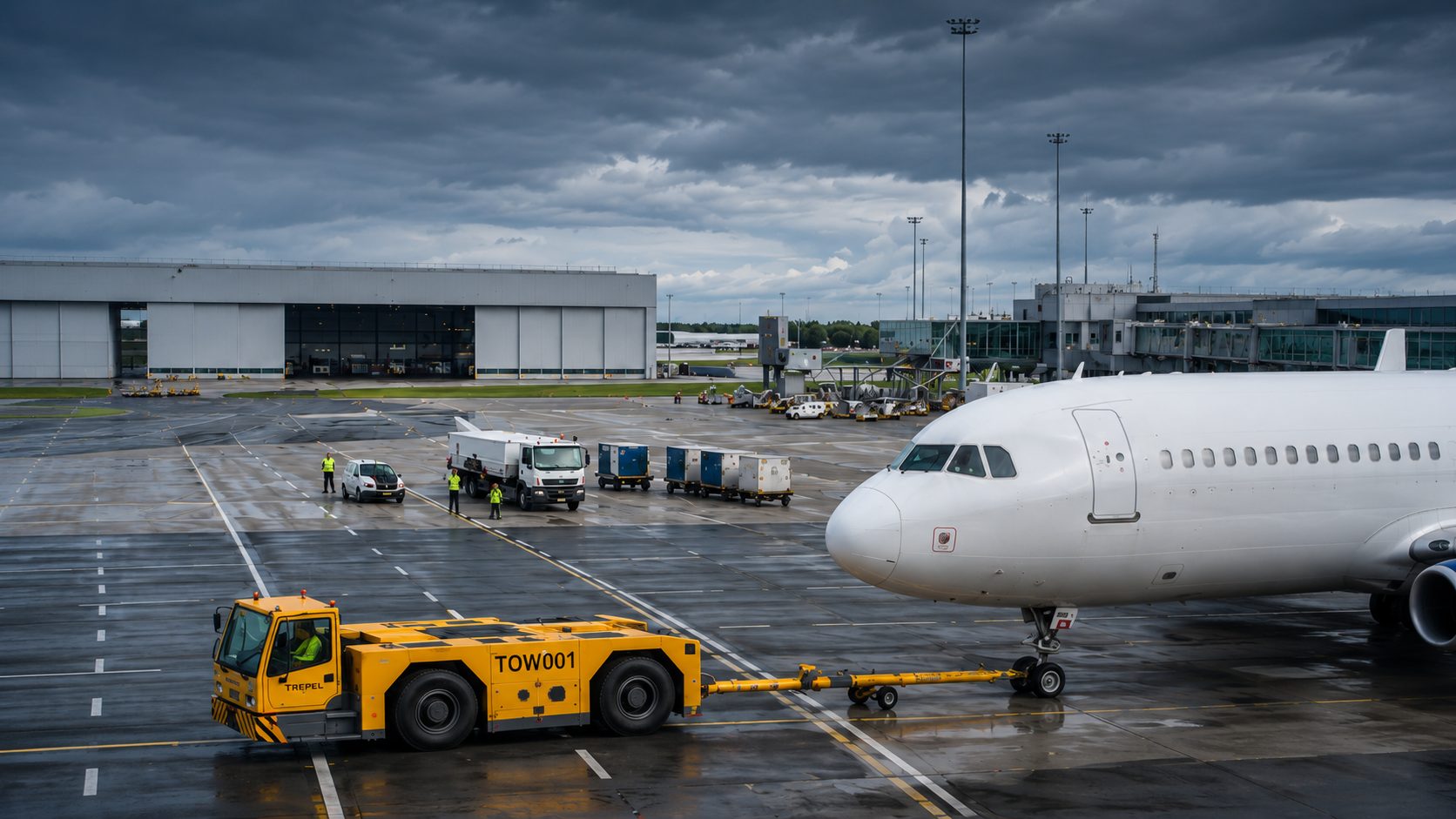
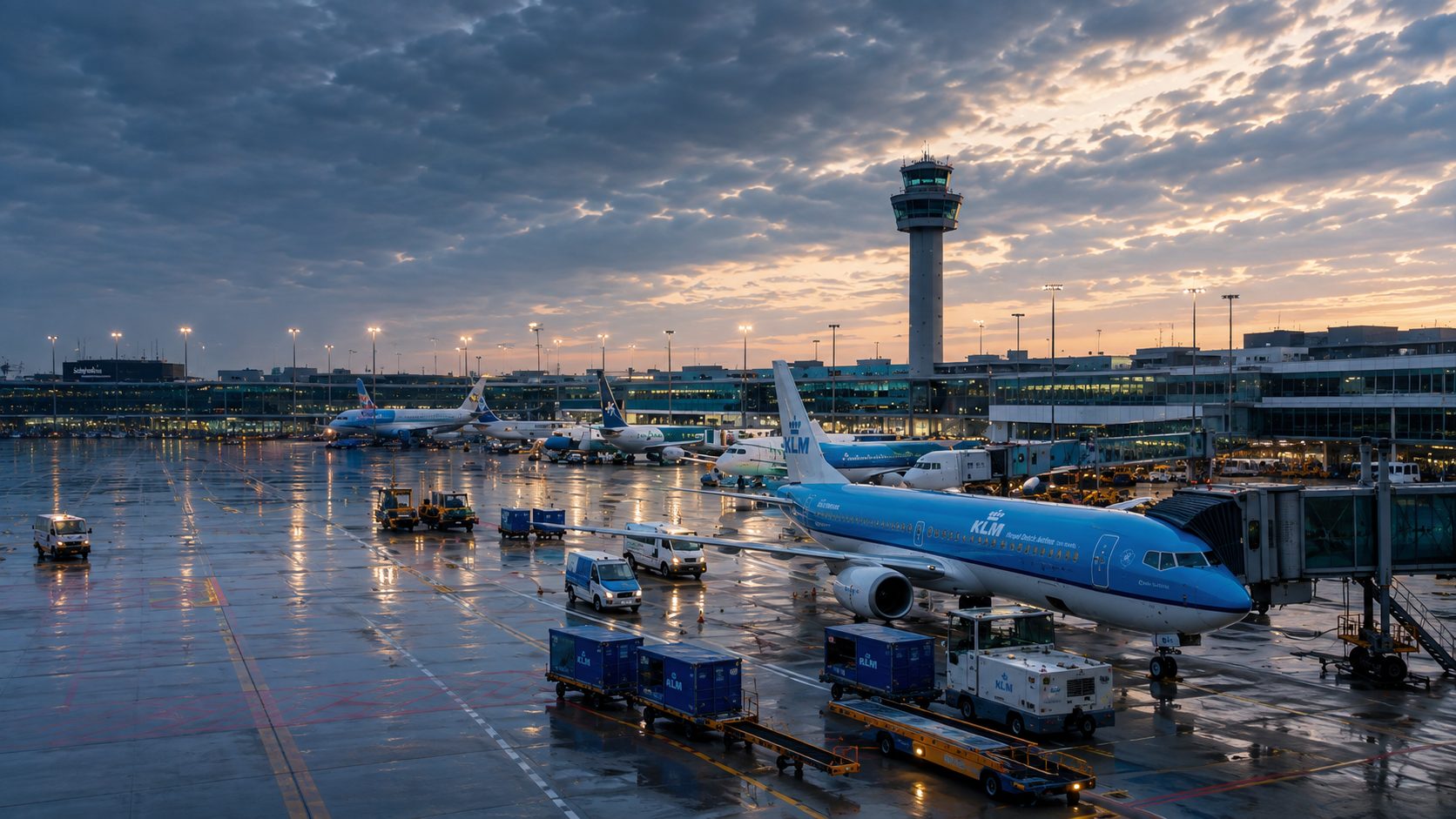
Airside and landside resources, planned against one turnaround.
- Stand & Gate
- Towing
- Bus Planning
- Check-in Counters
- Baggage Reclaim
Unlock up to 5% more capacity from existing infrastructure with our intelligent optimization platform, giving your staff AI Superpowers for smoother operations.
Resource management is one of the defining problems of this decade. The same airports and the same runways are expected to handle roughly twice as many passengers by 2040, while the physical footprint stays essentially unchanged.
Building more is slow, expensive, contested, or simply not feasible on the relevant timescale. That leaves one lever: using what already exists far more intelligently, at a level of precision no manual planning process can sustain.
Passengers the same airports are expected to handle by 2040
Extra capacity unlocked from existing infrastructure
New runways, stands or terminals required to get there
Planners work on a live timeline of the operation. The optimizer continuously calculates the best possible plan: resolving conflicts, reducing delays and maximising resource utilisation. An AI agent handles scenario testing, forecasting and reallocation from the control panel or plain-language instructions.

The Transformers platform is the hardened, multi-tenant foundation every module runs on. Each new module inherits the same enterprise-grade plumbing on day one, so it ships faster, behaves consistently, and meets the same security and compliance bar.
Isolated, branchable environments. Overlay a disruption, a schedule change or a stand closure on the live operation, explore the consequences, then discard the branch or promote it.
A shared library of solver models spanning the combinatorial problems behind stand assignment, gate planning, counter allocation, baggage flows and GSE routing.
A conversational layer across the platform. Interrogate the operation, run scenarios and execute changes in natural language, on the same data, optimizers and audit trail as everything else.
Every change, by every user or algorithm, captured with full context: who, what, when and why. Nothing is silently overwritten and every state is reversible.
AODB, flight feeds, resource systems, billing, messaging buses and IoT signals connect once at platform level. Every module then consumes one consistent operational picture.
A unified analytics layer that turns operational data into KPIs, exports and dashboards, consistent across every module rather than rebuilt for each.
Cross-cutting metadata that lets you slice the operation by your own dimensions: terminal, alliance, contract, handler, pier or aircraft category, with no bespoke development.
Organisations, roles and per-planning-horizon access control. Strategic planners, day-of-operations controllers and external handlers each see exactly what they should.
A stand, a berth, a check-in hall, a hinterland corridor. Underneath, they are the same class of problem: fixed capacity, moving demand, hard constraints. One core solves them. Each module speaks its own domain.
Aviation
Airside and landside resources, planned against one turnaround.
Ports
Quay, network and hinterland capacity, planned against one call.
How the platform fits an operation that already runs on a dense web of systems, rules and people.
The combinatorial problems behind resource allocation: which aircraft goes to which stand, how gates and check-in desks are assigned across airlines and opening windows, how tow jobs and apron buses are sequenced against pushback windows, and how arriving flights are matched to reclaim belts. A shared optimizer library sits at the heart of the platform, so modules plug into a common engine instead of reinventing their own solver.
Aviation operations run on a dense web of upstream and downstream systems: AODB, flight feeds, resource systems, billing, messaging buses and IoT signals. The integration layer connects to those sources once, at platform level, so every module consumes a single consistent operational picture and writes back through the same governed channels.
Yes. Workspaces give you isolated, branchable environments where you can overlay a scenario on the live operation, such as a disruption recovery, a schedule change, a construction phase or a stand closure. Explore the consequences, then either discard the branch or promote it to the live plan. Planning becomes a safe, reversible exercise rather than a destructive edit.
The platform is multi-tenant by design, with organisations, roles and per-planning-horizon access controls. Strategic planners, day-of-operations controllers and external handlers each see exactly what they should, on the same underlying data, under one access model.
Every change, by every user or algorithm, is captured with full context: who, what, when and why. Nothing is silently overwritten and every state is reversible. That matters operationally when recovering from a mistake, commercially when settling disputes with airlines and handlers, and for regulatory compliance.
No. Most operations start with a single module against the resource problem that hurts most, then extend from there. Because every module runs on the same core, adding the next one is an extension of an existing deployment rather than a new integration project.
We will walk you through the platform against your own constraints: stands, gates, counters or tows.